

EU/ENG - The Annual Meetings of the International Monetary Fund (IMF) and the World Bank, which took place in Washington from October 11 to 17, 2021, were held in a hybrid format due to ongoing health restrictions. Despite a reduced physical presence, European institutions and governments maintained a central role in the financial and political discussions, bolstered by the consolidation of NextGenerationEU. However, they shared deep concerns over the initial signs of the energy crisis and the delays in the global vaccination campaign across developing countries.

Europeans united in support of Managing Director Georgieva
The proceedings opened in a climate of intense institutional tension at the Fund's summit, triggered by allegations against Managing Director Kristalina Georgieva regarding alleged political pressure to alter the Doing Business report in favor of China during her previous tenure at the World Bank. On the official eve of the meetings, the Fund's Executive Board reaffirmed its confidence in her. In this context, the bloc of European countries—led by France, Germany, and Italy—showed a united front in her support to preserve governance stability and avert a leadership crisis, in keeping with the unwritten convention that assigns the leadership of the institution to a European.
European mediation through the Italian-led G20
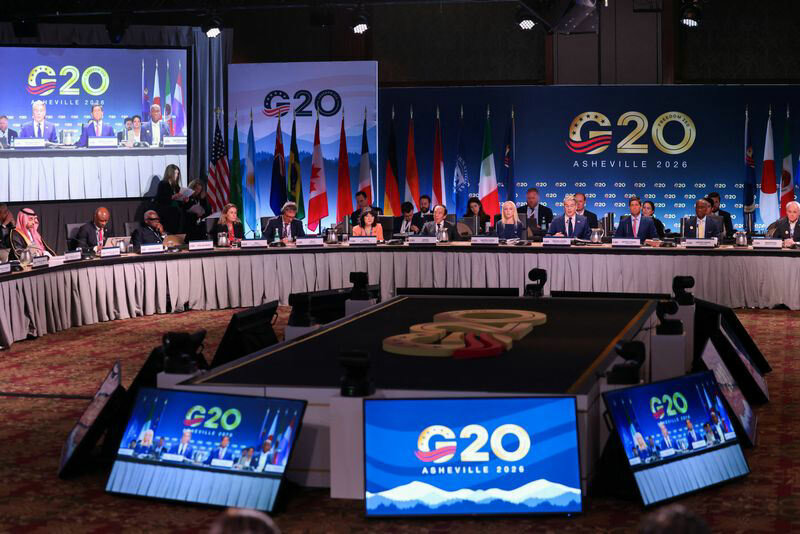
Since October 2021 coincided with the final phase of the Italian G20 Presidency, European representatives found a natural channel for mediation in Washington, where Italy's top economic officials chaired the fourth official meeting of G20 Finance Ministers and Central Bank Governors. In that forum, European action helped formalize the ratification of the political consensus on a 15% global minimum tax for multinationals, aimed at curbing bottom-up tax competition, and backed the global target to reallocate $100 billion of the new Special Drawing Rights (SDR) issuance to benefit low-income economies, particularly in Africa.
Global recovery, climate, and the first warning signs
During the sessions of the International Monetary and Financial Committee (IMFC), European officials focused their interventions on the risk of an asymmetrical global recovery. They highlighted that many emerging markets were lagging behind Europe’s robust recovery and reaffirmed the European Union's commitment to scaling up the supply of vaccine doses through the COVAX facility. Concurrently, the European delegation pushed within the World Bank forums for development financing criteria to integrate the decarbonization targets of the Paris Agreement more bindingly, anticipating the agenda of the upcoming COP26 in Glasgow. In sideline talks, Europe also pointed out the impact that skyrocketing gas prices—fluctuating above €100/MWh in Amsterdam at the time—and semiconductor shortages were having on the continent's industrial output, calling for global monitoring of supply chains.
Although European delegations arrived in Washington with macroeconomic indicators showing marked improvement compared to the previous year, the first friction points emerged with their U.S. counterparts and certain emerging markets. The latter demonstrated a more cautious stance toward inflation, which Europe and the ECB still viewed at the time as a predominantly transitory phenomenon.

EU/ITA - I Meeting Annuali del Fondo Monetario Internazionale (FMI) e della Banca Mondiale, che si sono svolti a Washington (Nela foto in alto la sede del Fondo Monetario) dall'11 al 17 ottobre 2021, si sono tenuti in un formato ibrido a causa delle restrizioni sanitarie ancora vigenti. Nonostante una presenza fisica ridotta, le istituzioni e i governi europei hanno mantenuto un ruolo centrale nelle discussioni finanziarie e politiche, forti del consolidamento del NextGenerationEU, ma hanno condiviso forti preoccupazioni per i primi segnali della crisi energetica e per i ritardi della campagna vaccinale globale nei paesi in via di sviluppo.
Europei compatti a Washington nel sostegno alla direttrice Georgeva
I lavori si sono aperti in un clima di forte tensione istituzionale per il vertice del Fondo, a causa delle accuse rivolte alla Direttrice Operativa Kristalina Georgieva riguardo a presunte pressioni politiche per alterare il rapporto Doing Business a favore della Cina durante il suo precedente mandato alla Banca Mondiale. Alla vigilia ufficiale dei lavori, il Board del Fondo le ha confermato la fiducia e, in questo frangente, il blocco dei paesi europei, guidato da Francia, Germania e Italia, si è dimostrato compatto nel sostenerla per preservare la stabilità della governance ed evitare una crisi al vertice, in linea con la consuetudine che assegna a un europeo la guida dell'istituzione.
La mediazione europea attraverso il G20 a guida italiana
Poiché l'ottobre 2021 è coinciso con la fase conclusiva della Presidenza italiana del G20, i rappresentanti europei hanno trovato un canale di mediazione naturale a Washington, dove i vertici italiani dell'economia hanno presieduto la quarta riunione ufficiale dei Ministri delle Finanze e dei Governatori delle Banche Centrali del G20. In quella sede, l'azione europea ha contribuito a formalizzare la ratifica del consenso politico sulla tassa minima globale al 15% per le multinazionali, volta a limitare la concorrenza fiscale al ribasso, e ha sostenuto l'obiettivo globale di riallocare 100 miliardi di dollari della nuova emissione di Diritti Speciali di Prelievo a beneficio delle economie a basso reddito, in particolare nel continente africano.
Ripresa globale, clima e i primi segnali di allarme
Nelle sessioni del Comitato Monetario e Finanziario Internazionale, gli esponenti europei hanno focalizzato i propri interventi sul rischio di una ripresa globale asimmetrica. Hanno evidenziato come molti mercati emergenti stessero rimanendo indietro rispetto al solido recupero europeo e hanno confermato l'impegno dell'Unione Europea a incrementare la fornitura di dosi vaccinali tramite il canale COVAX. Parallelamente, la rappresentanza europea ha spinto nei tavoli della Banca Mondiale affinché i criteri di finanziamento allo sviluppo integrassero in modo più vincolante i target di decarbonizzazione dell'Accordo di Parigi, anticipando l'agenda della successiva COP26 di Glasgow. Nei colloqui a margine, l'Europa ha segnalato anche l'impatto che il prezzo del gas, fluttuante in quei giorni sopra i 100€/MWh ad Amsterdam, e la carenza di semiconduttori stavano avendo sulla produzione industriale continentale, auspicando un monitoraggio globale delle catene di approvvigionamento.
Sebbene le delegazioni europee si fossero presentate a Washington con indicatori macroeconomici in netto miglioramento rispetto all'anno precedente, sono emerse le prime divergenze di vedute con la controparte statunitense e con alcuni mercati emergenti, i quali hanno manifestato un'attitudine più prudente nei confronti dell'inflazione, giudicata in quel momento dall'Europa e dalla BCE ancora come un fenomeno prevalentemente temporaneo.
inviati associati @euroeconomie.it*
*This text is a think tank note and is not a journalistic article - Questo testo è una nota del think tank e non è un articolo giornalistico