

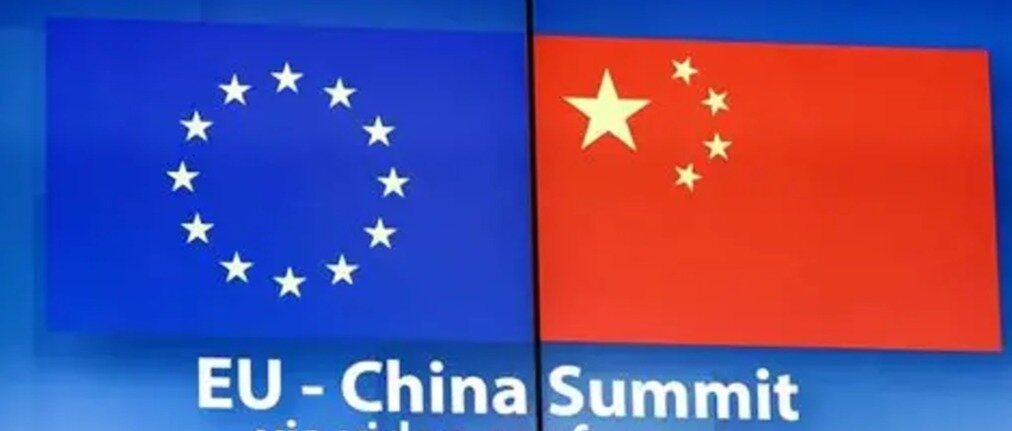
EU/ITA - The birth of a geoeconomic doctrine or posture is rarely measured by the auditorium where it is first articulated. Although European Commission President Ursula von der Leyen laid down the conceptual architecture of "de-risking" in Brussels just a week ago, on March 30, the true litmus test of this strategic shift lies in its practical application. For a European external projection that is still defining itself, designed to maneuver within the tightening grip of US-China competition, that moment arrived in recent days. With the conclusion of the three-day official mission (April 5–7) that brought her to Beijing alongside French President Emmanuel Macron, von der Leyen attempted her most complex operation yet: presenting this new approach directly to the Chinese leadership.
The journey into the heart of the Chinese state apparatus highlighted both the complexities of continental diplomacy and deep-seated, systemic divergences. By choosing a joint presence with Macron, the objective was to project a unified European front—an exercise fraught with obstacles, given the varying sensitivities and distinct economic interests that individual member states maintain with Beijing. For years, the Union’s approach to China remained predominantly transactional, focused on securing market access for European industrial giants. However, the vulnerabilities exposed in the post-pandemic era, coupled with Beijing’s positioning regarding the conflict in Ukraine, have prompted Brussels to reassess the premises of such complacency. The Beijing mission signals Europe’s intent to define its security parameters with greater clarity.
In her talks with President Xi Jinping, von der Leyen sought to outline a position distinct from that of the United States, aiming to demonstrate that Europe intends to act as an autonomous player rather than a mere executor of Washington’s decisions. Facing the Chinese leadership, the President underscored the necessity of safeguarding Europe’s strategic assets. In Brussels’ view, this will translate into the adoption of defensive mechanisms for critical infrastructure, more stringent scrutiny of outbound investments in key sectors, and the close monitoring of dual-use technologies capable of altering the security balance.
At the same time, the European delegation insisted on the substantial differences between de-risking and the decoupling strategy advocated by broad swathes of the American political establishment. Von der Leyen made it clear to her counterparts that the Union does not seek a rupture of economic ties or a contraction of global trade. Instead, she framed the doctrine as a defensive recalibration based on diversification and the management of unilateral dependencies, rather than a policy of geopolitical containment.
This diplomatic step represents an initial test for the resilience of the European strategy. Although the road toward true strategic autonomy remains long and bound to the member states’ capacity to maintain a common line of action, the attempt to propose a pragmatic "third way" aims to avoid both the costs of a drastic macroeconomic rupture with China—the EU's second-largest trading partner—and the risks of unchecked dependence. The efficacy of this approach will be measured as early as the upcoming international fixtures, starting with next month’s G7 summit in Hiroshima, which will reveal whether the European formula can offer a credible, shared alternative for Western allies as well.
Strategic Unit @euroeconomie.it*
*This text is a think tank note and is not a journalistic article

EU/ITA - La nascita di una dottrina e postura geoeconomica si misura raramente sulla base dell'auditorium in cui viene pronunciata per la prima volta. Sebbene la Presidente della Commissione Europea, Ursula von der Leyen, abbia stabilito l'architettura concettuale del de-risking a Bruxelles appena una settimana fa, il 30 marzo, il vero banco di prova di questa svolta risiede nella sua applicazione pratica. Per una proiezione esterna europea ancora in fase di definizione, concepita per muoversi nella morsa della competizione tra Stati Uniti e Cina, quel momento è arrivato nei giorni scorsi. Con la conclusione della missione ufficiale di tre giorni (5-7 aprile) che l'ha vista a Pechino al fianco del Presidente francese Emmanuel Macron, von der Leyen ha tentato l'operazione più complessa: presentare questo nuovo approccio direttamente alla leadership cinese.
Il viaggio nel cuore dell'apparato statale cinese ha evidenziato le complessità della diplomazia continentale e le persistenti divergenze sistemiche. Scegliendo la via della doppia presenza con Macron, l'obiettivo era proiettare un fronte europeo compatto — un esercizio non privo di ostacoli, date le diverse sensibilità e i differenti interessi economici che i singoli Stati membri coltivano con Pechino. Per anni, l'approccio dell'Unione verso la Cina è rimasto prevalentemente transazionale, focalizzato sull'accesso al mercato per i colossi industriali europei. Tuttavia, le vulnerabilità emerse nella fase post-pandemica e il posizionamento di Pechino nel contesto del conflitto in Ucraina hanno spinto Bruxelles a rivedere i presupposti di tale compiacenza. La missione a Pechino indica l'intenzione dell'Europa di definire con maggiore chiarezza i propri confini di sicurezza.
Nei colloqui con il Presidente Xi Jinping, von der Leyen ha cercato di delineare una posizione distinta da quella statunitense, con l'obiettivo di dimostrare che l'Europa intende muoversi come un attore autonomo e non come un mero esecutore delle decisioni di Washington. Di fronte alla leadership cinese, la Presidente ha esposto la necessità di tutelare gli asset strategici europei. Nelle intenzioni di Bruxelles, questo si tradurrà nell'adozione di meccanismi difensivi per le infrastrutture critiche, in un controllo più stringente sugli investimenti in uscita nei settori chiave e nel monitoraggio delle tecnologie dual-use (a doppio uso, civile e militare) suscettibili di alterare gli equilibri di sicurezza.
Allo stesso tempo, la delegazione europea ha insistito sulle differenze sostanziali tra il de-risking e la linea del decoupling (disaccoppiamento) caldeggiata da ampi settori politici americani. Von der Leyen ha chiarito alle controparti che l'Unione non persegue una rottura dei legami economici né un ridimensionamento del commercio globale, configurando la dottrina come una ricalibrazione difensiva basata sulla diversificazione e sulla gestione delle dipendenze unilaterali, piuttosto che come un contenimento di matrice geopolitica.
Questo passaggio diplomatico rappresenta un primo test per la tenuta della strategia europea. Sebbene il cammino verso una reale autonomia strategica resti lungo e vincolato alla capacità degli Stati membri di mantenere una linea d'azione comune, il tentativo di proporre una "terza via" pragmatica punta a evitare sia i costi di una rottura macroeconomica drastica con il secondo partner commerciale della Cina, sia i rischi di una dipendenza incontrollata. I risultati di questo approccio verranno misurati già nei prossimi appuntamenti internazionali, a partire dal vertice del G7 di Hiroshima del mese prossimo, dove si vedrà se la formula europea saprà offrire un'alternativa credibile e condivisa anche dagli alleati occidentali.
Strategic Unit @euroeconomie.it*
*This text is a think tank note and is not a journalistic article