instagram
twitter
linkedin
whatsapp
X

Newsletter

euroeconomie (10)

Stay updated on all the news from euroeconomie.it

euroeconomie2
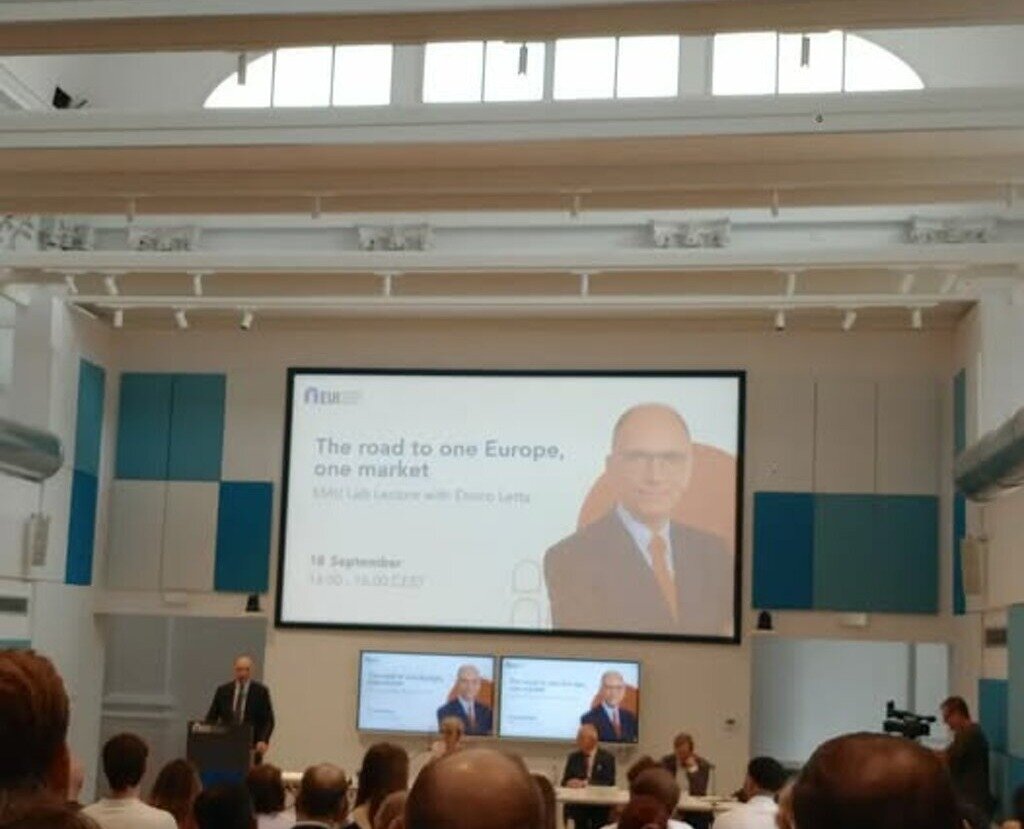
[10/10/2026 21:45] State, Market, and Territory: Lessons from the 2026 "Festival dell'Economia Critica"[04/10/2026 21:28] The Architecture of Human Capital: Reflections from the 2026 Marcello De Cecco Days[27/09/2026 10:49] Ecco la redazione giovanile di Euroeconomie all'Europa Project Week 2026![18/09/2026 18:21] The Road to One Europe, One Market: Enrico Letta at the EUI EMU Lab[16/09/2026 19:14] Remembering Carlo Azeglio Ciampi, Ten Years On[11/09/2026 05:34] ECB raises interest rates by 25 basis points as energy risks escalate[09/09/2026 02:48] Euro Area GDP and Employment Insights from the Q2 2026 Eurostat Brief[03/09/2026 08:08] G20 : Pragmatism Prevails Despite Beijing's Criticism, Backed by EU Stability Focus[01/09/2026 20:33] Energy shock pushes Eurozone inflation to 3.3% as ECB rate hike looms[01/09/2026 01:24] Euro Area Unemployment Rate Holds at 6.4% in July 2026 as Reported on September 1[01/09/2026 00:03] Mario Draghi Form Rhine Group Coalition to Target Europe’s Delivery Gap[28/08/2026 23:19] Rebuilding Europe’s Edge: The Strategy of Renewal. Notes on Mario Draghi’s Latest Essay[11/08/2026 22:26] Canicule au travail : syndacats en alerte face à l'urgence climatique en France[11/08/2026 11:39] Protecting German Workers Against Extreme Heat: The Union Push[11/08/2026 10:26] Reclaiming Europe’s Social Pillar: Quality Jobs, AI Governance, and the End of Soft Law[11/08/2026 09:04] Extreme Heat, Frontline Workers, and Trade Union Action: Defending Labor in a Warming Europe[06/08/2026 05:05] EU Tech Rules: AI Act Implementation in the EU Economy[04/08/2026 11:20] Euro Area July Inflation Ticks Up to 2.9%[23/07/2026 17:38] ECB Maintains Policy Stance Post-June Raise Amid Energy Market Volatility[23/07/2026 15:58] UK Treasury: John Healey Takes the Helm in Burnham’s New Labour Era[23/07/2026 15:31] Eurozone Inflation Moderates to 2.8%, but Price Pressures Across Member States Remain Divergent[19/07/2026 01:27] The Post-Thatcherite Turn: Andy Burnham Becomes Britain’s Eighth Labour Prime Minister[16/07/2026 14:56] Eurogroup: Fiscal Governance and the Imperative of Biennial Programming[11/07/2026 10:44] Reconfiguring Europe: The Florence Report by Buti, Corsetti & Peychev[10/07/2026 22:00] The digital euro takes a step forward[02/07/2026 08:00] Sintra 2026: Assessing the Intersection of Innovation and Monetary Stability[01/07/2026 20:37] Dublin’s Economic Agenda: Navigating Sovereignty and Fiscal Pragmatism[29/06/2026 12:05] Mani Visibili 2026: The Human Factor[26/06/2026 15:35] Navigating Historical Cohesion Policy Data: A Guide to the EU Commission’s Open Data Platform[25/06/2026 21:00] Sommet d’Antibes : avancées de la coopération économique entre l’Italie et la France[23/06/2026 20:26] Andy Burnham tipped as frontrunner to succeed Starmer: A look at his economic platform[23/06/2026 20:15] The Digital Euro: A Strategic Pillar for European Monetary Autonomy[23/06/2026 19:14] The Brexit Decade: A Structural Disconnection Revisited[20/06/2026 07:03] EU Budget 2028: Balancing Strategic Centralization with the Social Compact[18/06/2026 09:14] G7: signs of dialogue on economic files and coordination on critical minerals
euroeconomie4

Bulgaria and Romania join the Schengen area

02/04/2024 21:22

Euroeconomie

Euroeconomies, euroeconomie, bulgaria-e-romania-in-schengn, spazio-schengen-, area-schengen,

Bulgaria and Romania join the Schengen area

Dopo 13 anni di attesa, i 2 Paesi entrano dal 31 marzo nello spazio di libera circolazione di persone e merci. Benefici per lavoratori e investitori.

EU/EN - From 31 March 2024, Romania and Bulgaria will join the Schengen Area, limited to internal air and sea borders, consequently third-country nationals coming from an EU State who reach these States by plane or ship will not be subject to border controls, as established by the EU Council Decision of 30 December 2023.


ITA - Dal 31 marzo 2024 la Romania e la Bulgaria entrano nello Spazio Schengen, limitatamente alle frontiere interne aeree e marittime, conseguentemente i cittadini di Paesi terzi provenienti da uno Stato UE che raggiungono tali Stati in aereo o nave non saranno soggetti ai controlli di frontiera, come deliberato dalla Decisione del Consiglio UE del 30 dicembre 2023.

L’adesione di entrambi i Paesi all’area Schengen permette ai viaggiatori che raggiungono la Romania o la Bulgaria in aereo o per via marittima di evitare il controllo del passaporto all’arrivo. Tuttavia, chi giunge in Romania e Bulgaria per via terrestre da un altro Stato dell’area Schengen, utilizzando mezzi di trasporto come il treno, l’autovettura o il bus, deve comunque essere sottoposto al controllo dei documenti di identità, poiché le regole di libera circolazione Schengen non si estendono alle frontiere terrestri, in conseguenza di un veto dell'Austria.

In maniera analoga un cittadino extra UE, che fa ingresso in Romania o in Bulgaria, sarà soggetto a controlli nel caso raggiunga uno Stato dell’Area Schengen, non facendo parte i due Paesi dell’Accordo per quanto riguarda le frontiere esterne.

Protestano aziende e sindacati dei camionisti: “Integrazione parziale ci penalizza, sprechiamo miliardi per le attese alle frontiere”.  Dalla Commissione vengono invece evidenziati i benefici attesi da lavoratori ed investitori, oltre al senso politico dell'ingresso dei due Paesi.


staff@euroeconomie.it


facebook
instagram
twitter
linkedin
whatsapp
X

@2021-2023 EUROECONOMIES

WEBSITE CREATED BY Q DIGITALY

Create Website with flazio.com | Free and Easy Website Builder