


EU/ENG - The fifth anniversary of the Seminario Permanente di Filosofia del Lavoro marks the consolidation of an initiative that, founded in 2017, has succeeded in restoring theoretical depth to the trade union debate. Promoted by the Fondazione Giuseppe Di Vittorio in partnership with the Department of Philosophy at Sapienza University of Rome, the project has served throughout its first five years as an indispensable intellectual laboratory for interpreting the transformations of the world of work.
Under the scientific direction of political philosopher Giorgio Fazio and the coordination of Laura Pennacchi, a leading intellectual in the Italian political Left over recent decades, the Seminar has pursued an analytical path that transcends the fragmented nature of technical approaches. Beginning in 2017 with a rigorous critique of narratives surrounding the "end of labor," the project has progressively delved into the dynamics of contemporary alienation and the crisis of industrial democracy, working to redefine the role of the trade union as a conscious political actor.
The cultural impetus of 2017 remains vital for understanding the Seminar's subsequent operational trajectory, rooted in a threefold process of intellectual deconstruction and reconstruction: the first act dismantled the rhetoric of the "end of labor," unmasking new geographies of alienation and rescuing the subject from a perspective merely ancillary to the market. The second act undertook an ethical and economic exegesis, redeeming labor from its condition as a mere commodity and reclaiming its status as an inalienable foundation of human dignity and citizenship. The third act finally breached the threshold of industrial democracy: a radical challenge aimed at restoring sovereignty to the worker, transforming the production site into a space for democratic exercise rather than passive hierarchy.
From that starting point, the project reached its mid-term milestone in 2022, the year marking the end of the first quinquennium, which saw the Seminar focus on the crux of social justice. The sessions explored how theories of justice can provide normative criteria for evaluating current institutional architectures within a context marked by profound distributive imbalances and technological challenges.
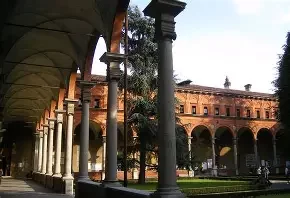
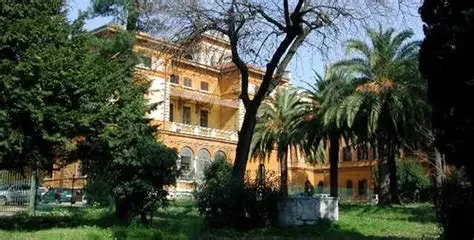
The strength of this initiative lies in having created a stable bridge between philosophical research—through synergies with the Società Italiana di Teoria Critica —and the trade union praxis of the Fondazione Di Vittorio. Villa Mirafiori (in the photo below) , the seat of the Faculty of Philosophy at Sapienza, has become the center of a permanent workshop that, far from a purely academic logic, has provided the tools to interpret precariousness and the impact of algorithms not as inevitabilities, but as open challenges to the democratic sovereignty of workers.
Five years after its inception, the Seminar does not merely celebrate its progress but stands as a strategic resource. The ability to integrate critical theory with trade union engagement represents the necessary condition for not passively enduring market transformations, but rather for steering them toward a perspective of justice and equity.
Cultural Unit @euroeconomie.it*
*This text is a think tank note and is not a journalistic article
EU/ITA - Il quinto anniversario del Seminario Permanente di Filosofia del Lavoro segna il consolidamento di un'esperienza che, nata nel 2017, ha saputo restituire spessore teorico al dibattito sindacale. Il progetto, promosso dalla Fondazione Giuseppe Di Vittorio insieme al Dipartimento di Filosofia della Sapienza di Roma, ha rappresentato in questo primo lustro un laboratorio di pensiero indispensabile per interpretare le trasformazioni del mondo del lavoro.
Sotto la direzione scientifica del filosofo politico accademico Giorgio Fazio e il coordinamento di Laura Pennacchi, intellettuale di primo piano nel dibattito della sinistra politica italiana degli ultimi decenni, il Seminario ha intrapreso un percorso di analisi che ha superato la frammentazione tipica dell'approccio tecnico. Partendo nel 2017 da una critica serrata alle narrazioni sulla "fine del lavoro", il progetto ha approfondito nel tempo le dinamiche dell'alienazione contemporanea e la crisi della democrazia industriale, lavorando per ridefinire il ruolo del sindacato come attore politico consapevole.
L'innesco culturale nel 2017 resta particolarmente importante per comprendere le future linee operative del seminario, grazie ad un triplice processo di decostruzione e riedificazione intellettuale: sin dal suo primo incontro pubblico il seminario ha scardinato la retorica della "fine del lavoro", smascherando le nuove geografie dell'alienazione e sottraendo il tema a una visione puramente ancillare rispetto al mercato. In secundis, il laboratorio di pensiero ha intrapreso un'esegesi etica ed economica, riscattando il lavoro dalla sua condizione di mera merce per ricondurlo al rango di fondamento inalienabile della dignità umana e della cittadinanza. E infine, già nel primo anno di attività, il seminario ha forzato la soglia della democrazia industriale: una sfida radicale volta a restituire sovranità al lavoratore, trasformando il luogo produttivo in uno spazio di esercizio democratico e non di passiva gerarchia.
si parte da allora e si giunge al giro di boa del 2022, anno che chiude il primo quinquennio, ha visto il Seminario focalizzarsi sul nodo della giustizia sociale. Gli incontri svolti hanno analizzato come le teorie della giustizia possano offrire criteri normativi per valutare le architetture istituzionali attuali, in un contesto segnato da profondi squilibri distributivi e dalla sfida tecnologica.
La forza di questa iniziativa risiede nell'aver creato un ponte stabile tra la ricerca filosofica tramite sinergie con la Societa Italiana di Teoria Critica e la prassi sindacale della Fondazione Di Vittorio. Villa Mirafiori (nella foto in alto), sede della Facoltà di Filosofia della Sapienza, è diventata il centro di un cantiere permanente che, lontano da una logica puramente accademica, ha fornito gli strumenti per leggere la precarietà e l'impatto degli algoritmi non come ineluttabilità, ma come sfide aperte alla sovranità democratica dei lavoratori.
A cinque anni dal suo avvio, il Seminario non si limita a celebrare un bilancio, ma si conferma come una risorsa strategica. La capacità di integrare teoria critica e impegno sindacale rappresenta la condizione necessaria per non subire passivamente le trasformazioni del mercato, ma per orientarle verso una prospettiva di giustizia ed equità.
Cultural Unit @euroeconomie.it*
*This text is a think tank note and is not a journalistic article - Questo testo è una nota del think tank e non è un articolo giornalistico