.png "euroeconomie (10)")



EU/ENG - Central bank leaders are eyeing 2026, a year that promises to be challenging to interpret when implementing monetary policies that anticipate recessionary economic cycles or resurgent inflation, which would undermine the dynamic stability of production systems and the stability of employment levels.
In Europe, on several occasions in the first half of December, President Lagarde of the European Central Bank (ECB) expressed optimism for eurozone growth, while in the United States, her counterpart Powell convinced the Federal Open Market Committee (FOMC) of the Federal Reserve (Fed) to approve a 25 basis point rate cut, bringing them to a new range between 3.50% and 3.75%. This is the third consecutive rate cut and the sixth since the Fed began its rate reduction cycle. The decision was confirmed by the FOMC with nine votes in favor and three against, in a climate that still anticipates Powell's departure in May 2026 and high-level maneuvering to launch candidates to replace him. From a more specific perspective on interest rate policy, it is not ruled out that the Fed may decide to keep rates unchanged in the coming months.
In the overall context of monetary policy orientations, the probability of an ECB rate cut on the sidelines of the next Governing Council meeting on December 18th is zero in Frankfurt.
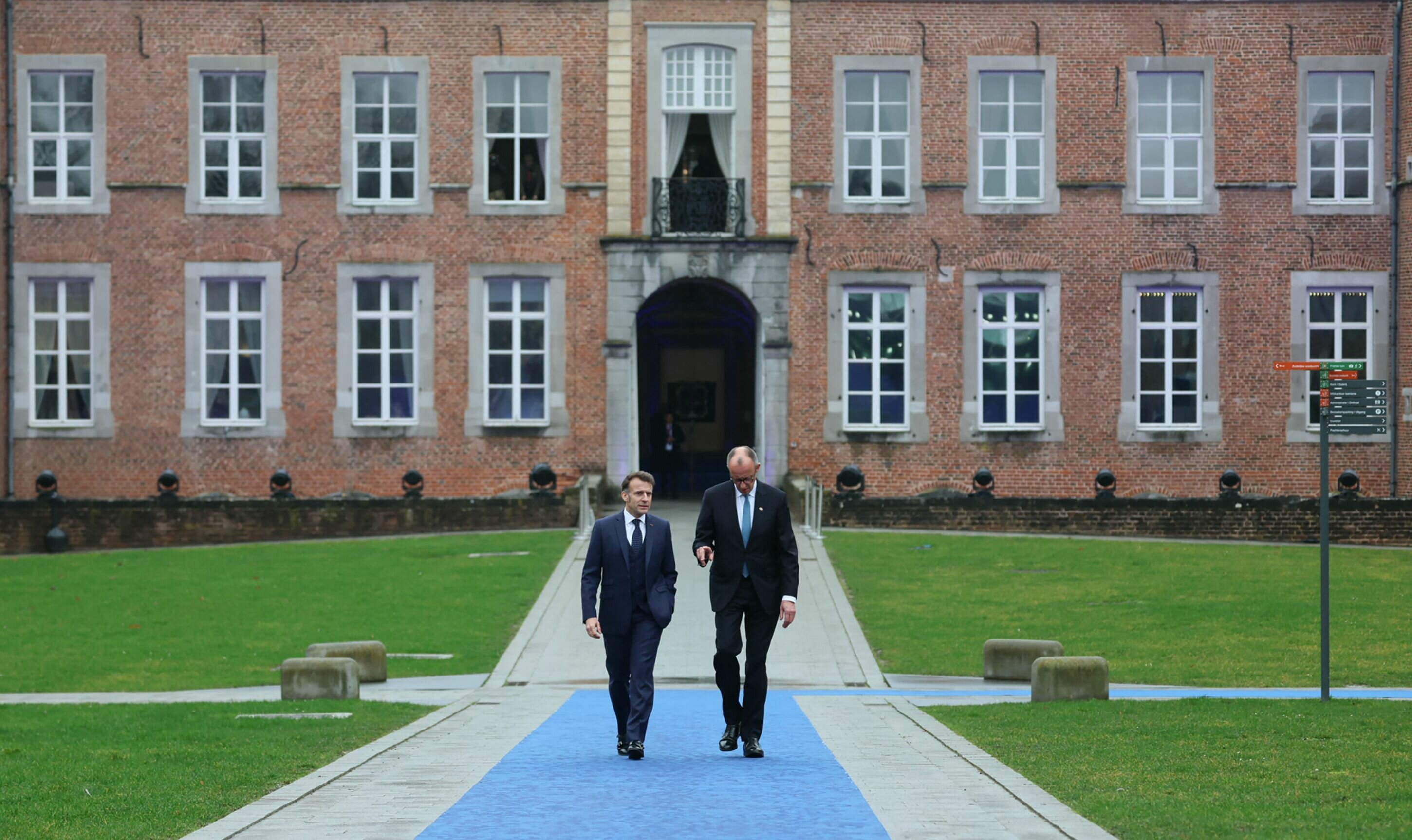
More generally, the debate over the appropriate monetary policy between governments, systemic central banks, and the Eurotower in Frankfurt has returned, albeit indirectly, to a tense situation. For the Governor of the Bank of France, Villeroy, there is no reason to raise rates in the near future, he said in an interview with Europe 1-CNews. And it is no coincidence that President Macron significantly stated in his interview with Les Echos: "European monetary policy today seems to me clearly susceptible to a clear adjustment. Reassessing the European internal market means that we cannot have inflation as our sole objective, but also growth and employment." In other words: avoid overly focusing on the ECB's primary mandate, which is to maintain price stability, in favor of a more expansionary monetary policy that fosters European growth.
These French intentions and hopes are hard to reconcile with the statements of Isabel Schnabel, a German member of the ECB's Executive Board, who has increasingly emphasized not ruling out a rate hike in 2026 and highlighting risk factors such as increased public spending and the productivity crisis in the eurozone's economies.
Since its inception, the ECB has witnessed the coexistence of different schools of monetary thought and representatives on its Executive Board. The prevalence of one school or another in the coming years will determine the ECB's monetary policy decisions and their impact on the real-life economic and social systems of the eurozone.
EU/ITA - I vertici delle banche centrali scrutano il 2026, anno che si annuncia non semplice da interpretare per poter attuare politiche monetarie che anticipino i cicli economici recessivi o il riacutizzarzi di fenomeni inflazionistici, sfiancanti per la stabilità dinamica dei sistemi produttivi e la tenuta dei livelli occupazionali.
In Europa, in diverse occasioni nella prima metà di dicembre, la presidente Lagarde della Banca Centrale Europea (Bce) ha espresso, ottimismo per la crescita dell'area euro, mentre negli Stati Uniti, l'omologo Powell ha convinto il Federal Open Market Committee (FOMC) della Federal Reserve (Fed) ad approvare un taglio dei tassi di 25 punti base portandoli a un nuovo range tra il 3,50% e il 3,75%. Si tratta del terzo taglio consecutivo e il sesto da quando la Fed ha avviato il ciclo di riduzione del costo del denaro. La decisione è stata confermata dal FOMC con nove voti a favore e tre contrari, in un clima che prevede comunque l'uscita dello stesso Powell a maggio del 2026 e manovre ad altissimo livello sul lancio di candidature per sostituirlo. Dal punto di vista più specifico della politica dei tassi, non si esclude che la Fed possa decidere di mantenerli invariati nei prossimi mesi.
Nel quadro generale degli orintamenti di politica monetaria, a Francoforte, la probabilità di un taglio dei tassi della Bce a margine del prossimo consiglio direttivo del 18 dicembre è data pari a zero.
Più in generale, il confronto sulla politica monetaria adottabile tra Governi, banche centrali di sistema e vertici dell'Eurotower di Francoforte, è tornato, seppur indirettamente, ad essere movimentato. Per il governatore della Banca di Francia Villeroy non c’è motivo di aumentare i tassi nel prossimo futuro, ha detto in un'intervista a Europe 1-CNews. E non a caso, il presidente Macron nella sua di intervista rilasciata a Les Echos, ha siginificativamente affermato: “La politica monetaria europea mi sembra oggi chiaramente suscettibile di un netto aggiustamento. Rivalutare il mercato interno europeo significa che non si può avere come unico obiettivo l’inflazione, ma anche la crescita e l’occupazione.” In altre parole: non occuparsi troppo del primo mandato della Bce, che è quello di cercare di mantenere i prezzi stabili, a favore di una politica monetaria più espansiva e che favorisca la crescita europea.
Intendimenti e auspici francesi, che mal si conciliano con le dichiarazioni di Isabel Schnabel, membro tedesco del Comitato esecutivo della Bce, sempre più spesso impegnata a non escludere un rialzo dei tassi nel 2026 e a sottolineare i fattori di rischio come l'incremento della spesa pubblica e la crisi di produttività dei sistemi economici dell'eurozona.
Nella Bce, si registra sin dalla fondazione la coesistenza di scuole diverse di pensiero monetario e di suoi esponenti nel comitato esecutivo. Il prevalere nei prossimi anni di una scuola o dell'altra, determinerà le scelte di politica monetaria della Bce e del loro impatto nella vita reale dei sistemi economici e sociali dell'eurozona.
Antonio De Chiara @euroeconomie.it *
* This contribution is not a journalistic article but an analytical brief - Questo contributo non è un articolo giornalistico ma un brief analitico.